Home Sewer Connection Explained
Process, Permits, Materials & Timeline
If you’re planning to connect your home to the local sewer system, replace an aging sewer line, or convert from septic to municipal sewer, choosing the right sewer connection contractor makes all the difference. Sewer installation isn’t just a plumbing task — it involves excavation, engineering, city permitting, environmental protection, and code-compliant workmanship.
And in coastal regions or high-moisture soil environments, like many neighborhoods throughout coastal communities, the stakes are even higher. Soil drainage, salt exposure, and shifting water tables can impact sewer line performance and longevity — which means working with experienced sewer connection contractors matters more than ever.
This comprehensive guide walks you through:
- How sewer connections work (in homeowner language — not contractor jargon)
- Signs you need sewer line installation or replacement
- The full connection process step-by-step
- Cost variables (with real-world expectations, not vague ranges)
- Sewer pipe materials and trenching methods explained
- How to choose a trustworthy sewer contractor
- Why local experience is particularly important near coastal regions
- And how Ocean Air Plumbing supports homeowners every step of the way
What a Sewer Connection Actually Does (And Why It Matters)
A sewer connection is the pathway that carries wastewater from your home into the public sewer system. Anytime you flush the toilet, take a shower, run the washing machine, or clean dishes — all of that water needs a clear, strong, downhill-flowing pipeline to travel away from your home.
In a properly installed sewer connection, wastewater flows:
Home Plumbing Fixtures → Drain Pipes → Sewer Lateral Line → City Sewer Main → Municipal Treatment Facility
But if any section is damaged, clogged, dipped, cracked, or incorrectly sloped… the wastewater has nowhere to go — except back toward your home .
That’s when homeowners begin to notice:
- Gurgling drains
- Sewer odors inside or outside the house
- Slow draining tubs or sinks
- Sewage backups in bathtubs or basements
- Wet or sunken patches in the yard
These are not normal — they’re signs that the sewer line needs attention immediately.
When Sewer Connection Services Are Needed
You might need a licensed sewer connection contractor if:
- You’re building a new home or addition
- You’re switching from a septic tank to municipal sewer
- An older clay, cast iron, or Orangeburg sewer line has collapsed, cracked, or rotted
- Tree roots have grown into the pipe and are causing blockages
- Your yard is experiencing sinkholes or soft spots due to leaking wastewater
And in many coastal communities, septic conversion is becoming more common due to:
- Higher groundwater levels
- Beach-sand soil that doesn’t absorb properly
- Local environmental protection laws
- Flooding risks during storms or high tides
Municipal sewer is more stable, cleaner, and lower maintenance long-term — especially near the coast.
Key Components of a Sewer System Connection
| Component | Role | Why It Matters |
| Sewer Lateral Line | Main pipe from home to city sewer | Must be leak-free, properly sloped, and durable |
| Cleanout Access | Exterior access cap | Allows quick clearing of blockages without digging |
| Sewer Tap | The point where private pipe meets public main | Must be installed precisely to prevent contamination |
| Backflow Prevention Valve | One-way valve that stops sewage reversing direction | Essential in flood-prone or coastal environments |
Coastal homes especially benefit from backflow prevention systems, because heavy rain, hurricanes, king tides, or municipal surges can push wastewater in reverse direction.
No thank you — protect your home.
The Sewer Connection Process (Detailed, Realistic, and Homeowner-Friendly)
1. Camera Inspection & Site Evaluation
A professional sewer camera is inserted through a cleanout or drain to inspect the existing system and determine pipe condition, slope, and routing.
This matters because:
- It prevents unnecessary digging
- It identifies exact damage or blockage points
- It guides the best installation route
Camera inspection = smart planning, not guesswork.
2. Permitting & Municipal Coordination
Sewer connections require approval from your city or county. A licensed contractor should handle this for you — homeowner permitting is time-consuming and confusing.
This step includes:
- Submitting sewer tie-in applications
- Requesting main line access approval
- Scheduling inspections
- Calling in utility locating (811)
If your contractor doesn’t mention permitting → run
3. Locating Underground Utilities
Before any digging begins, all underground utilities must be marked:
- Gas lines
- Water lines
- Irrigation & sprinkler lines
- Electrical conduit
- Cable & internet lines
This is required by law — and prevents emergencies no one wants.
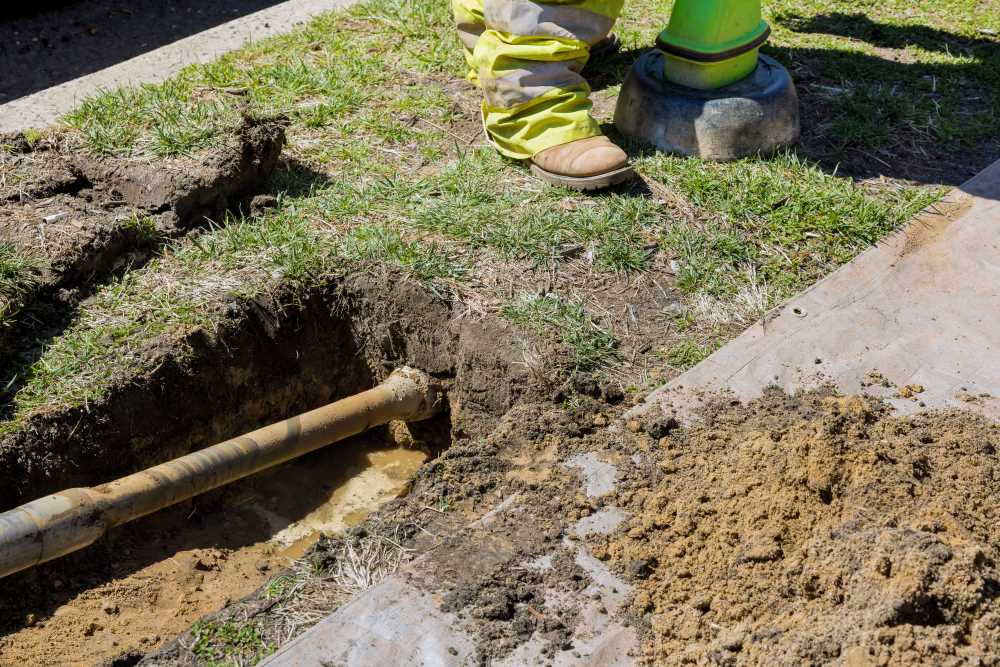
4. Excavation or Trenchless Installation
Depending on your soil, yard layout, and complexity, the contractor will choose:
| Method | Best For | Benefits |
| Standard Trenching | Most home installs | Clear access & cost-effective |
| Trenchless Pipe Bursting | Replacing collapsed pipes | Minimal yard disruption |
| CIPP Lining (Cured-in-Place Pipe) | Strengthening existing pipe | No digging required |
Coastal lawns often have sand-based soil, which is easier to dig but can collapse if handled wrong — experience matters here.
5. Sewer Pipe Installation
The new pipe is installed at a precise slope — typically 1/4 inch per foot — to ensure strong gravity flow.
No slope = clogs
Too much slope = flow outruns solids (also causes clogs)
This is a skill — not guesswork.
6. Connection to City Sewer Main
The sewer tap must be:
- Approved by the municipality
- Installed at the correct angle
- Sealed to prevent leakage
A qualified contractor handles the connection safely and legally.
7. Testing + Inspection
Inspectors confirm:
- Leak-free installation
- Correct slopes
- Code compliance
- Safe connection to the main system
Once approved → backfill begins.
8. Yard & Surface Restoration
The soil is replaced, compacted, and graded.
Optional restoration can include:
- Sod replacement
- Mulch beds
- Driveway or paver resets
A good contractor leaves your property looking cared for — not like a construction zone.
Signs Your Sewer Line Needs Repair or Replacement
Watch for:
- Sewage smell near drains
- Slow draining tubs or showers
- Gurgling sounds when flushing toilets
- Toilets bubbling or water rising unexpectedly
- Patches of bright green grass over the sewer line
- Wet or sinking yard spots
These aren’t just “plumbing issues” — they’re warnings.
Sewer Connection Cost Breakdown
Most homeowners ask:
“How much does a sewer connection cost?”
A realistic cost range is $4,000 to $15,000+, depending on:
| Cost Factor | Impact | Coastal Consideration |
| Distance from home to city sewer | Longer distance = higher cost | Beach lots are often set back further |
| Soil type | Rocky soil costs more | Coastal sand shifts → requires reinforced backfill |
| Trench vs. trenchless | Trenchless reduces yard damage | Coastal yards often benefit from trenchless |
| Depth of pipe | Deeper excavations cost more | High water tables require careful trenching |
| Permit fees | City-based | Coastal counties may have environmental compliance costs |
A trustworthy contractor explains every line item, not just the total.
How to Choose a Trustworthy Sewer Connection Contractor
Look for:
- Local licensing & insurance
- Experience with your local municipality
- Camera inspection services
- Knowledge of coastal/high-water table sewer installation
- Transparent written estimates
- Solid customer reviews
Red Flags
Run if a contractor:
- Avoids permits
- Offers a “cash discount” that skips inspections
- Cannot explain slope grade or pipe diameter
- Won’t show previous work or photos
Your home is worth protecting.
Why Homeowners Trust Ocean Air Plumbing
Ocean Air Plumbing provides full-service sewer connection & repair, handling:
- Permits & inspections
- Camera diagnostics
- Trenching & trenchless methods
- Backflow protection installation
- Yard restoration
And they are local — meaning they understand:
- Coastal moisture conditions
- Sand-based soil behavior
- Salt corrosion risks
- Local plumbing codes & inspector expectations
Related Services:
Drain Cleaning & Hydro Jetting
https://oceanaircool.com/drain-cleaning/
Sewer Line Repair & Replacement
https://oceanaircool.com/sewer-repair/
Plumbing Maintenance & Leak Repair
https://oceanaircool.com/plumbing-services/
Sewer Connection FAQs
How long does a sewer connection take?
Most standard sewer connection projects take 1–3 days once work begins, but the total timeline can vary depending on permitting requirements, soil conditions, the distance to the municipal sewer main, and whether trenchless or traditional excavation is used. The permitting process itself can sometimes take additional time depending on your city’s workload and approval schedule. Coastal properties or homes with high groundwater levels may also require additional stabilization steps. For the most accurate timeframe, a site evaluation is recommended so the contractor can review the specific layout of your property.
Do I need a permit to connect my home to the city sewer?
Yes — sewer connections always require proper permitting and inspection from the city or county to ensure the installation is safe and compliant with local plumbing codes. The permit ensures the sewer tap, pipe slope, materials, and final installation meet regulatory standards. A licensed sewer connection contractor should handle this entire process on your behalf, including submitting plans, coordinating inspections, and communicating with municipal departments. This helps avoid fines, delays, or required rework. Never trust any contractor who suggests skipping permits — it risks serious future issues and legal liability.
Can I continue living in my home during the sewer connection process?
Yes — in most cases, you can stay in your home during installation. Water service generally remains active, and contractors will coordinate work to minimize interruptions to bathrooms and household drains. If a temporary shutdown is needed, it is usually brief and scheduled in advance. For septic-to-sewer conversion projects, contractors may temporarily bypass or stage parts of the system to ensure you retain basic functionality. The key is working with a contractor who communicates clearly, plans work phases strategically, and respects your daily routines throughout the project.
What sewer pipe material lasts the longest, especially in coastal environments?
For most residential sewer systems, PVC (Polyvinyl Chloride) is the preferred and most durable material due to its corrosion resistance, long lifespan, smooth interior surface, and resistance to tree root intrusion. It performs particularly well in coastal regions, where moisture, salt exposure, and shifting water tables can accelerate deterioration in older materials like cast iron, clay, or Orangeburg pipe. PVC is lightweight, stable, cost-effective, and designed to maintain proper flow rates over time. When paired with correct slope grading and backflow protection, it provides a long-lasting, reliable sewer connection solution.
What are signs that my existing sewer line may need repair or replacement?
Common warning signs include slow or gurgling drains, sewer odors inside or outside the home, recurring backups, toilets bubbling, areas of unusually lush grass, or soggy or sunken patches in the yard. These symptoms can indicate pipe blockages, cracks, collapsed sections, or root intrusion. Homeowners near the coast may notice issues sooner due to shifting soil or seasonal high water tables. A sewer camera inspection is the most reliable way to diagnose the issue without digging. Early detection can prevent property damage and reduce repair costs significantly.
Final Takeaways
- Sewer connections must be done by licensed contractors.
- Camera inspection prevents unnecessary digging and cost.
- Coastal homes require special attention to water tables and pipe protection.
- Trenchless options minimize yard disruption.
- Ocean Air Plumbing handles your project from start to finish.
Ready to Get Started?
If you’re planning a sewer installation, replacement, or septic-to-sewer conversion, the safest and smartest move is to work with professionals who understand your local soil, water table, and municipal system.
Contact Ocean Air Plumbing:
https://oceanaircool.com/contact-us/
Local expertise. Clear communication. Work done right the first time.