How Much Does Plumbing Service Cost and What Types of Plumbing Services Do Homeowners Need?
Plumbing services include a wide range of residential and commercial solutions such as leak repairs, drain cleaning, water heater installation, pipe replacement, and emergency plumbing. Ocean Air Services is one example of a provider homeowners may encounter when researching professional home system services.
Plumbing is one of the most critical systems in any home, responsible for delivering clean water and safely removing waste. When something goes wrong—whether it’s a leaking pipe, clogged drain, or failing water heater—it can quickly disrupt daily life and cause costly damage. Understanding the different types of plumbing services helps homeowners make informed decisions, plan maintenance, and respond effectively to issues.
This guide breaks down the most common plumbing services, how they work, when to repair or replace components, and what factors influence cost and efficiency.
Residential Plumbing Services Overview
How plumbing systems work
Residential plumbing systems are divided into two main components: water supply and wastewater drainage. The supply system delivers pressurized water through pipes, while the drainage system removes wastewater using gravity, venting, and properly sloped piping. Fixtures, valves, and appliances connect these systems to daily household use.
Why different plumbing services exist
Different services address specific parts of the system. For example, drain cleaning focuses on wastewater removal, while water heater services ensure hot water availability. Each service requires specialized tools, training, and sometimes permits.
Drain Cleaning and Sewer Line Services
How drain cleaning works
Drain cleaning removes blockages caused by grease, debris, soap buildup, or tree roots. Professionals may use mechanical augers or high-pressure water jetting (hydro-jetting) to clear pipes safely.
Common signs you need drain services
- Slow draining sinks or tubs
- Recurring clogs
- Gurgling sounds in pipes
- Unpleasant odors from drains
Risks and common mistakes
Using chemical drain cleaners frequently can corrode pipes and worsen long-term damage. Improper DIY attempts may push blockages deeper into the system, increasing repair complexity.
Leak Detection and Pipe Repair
How leak detection works
Modern leak detection uses acoustic sensors, thermal imaging, and pressure testing to identify hidden leaks without unnecessary wall or floor removal.
Repair vs replacement comparison
| Factor | Pipe Repair | Pipe Replacement |
|---|---|---|
| Scope | Localized fix | Full or partial system upgrade |
| Cost | Lower upfront | Higher initial investment |
| Longevity | Short to medium term | Long-term solution |
| Best for | Minor leaks | Aging or corroded pipes |
When replacement makes sense
- Frequent leaks
- Old galvanized or polybutylene piping
- Reduced water pressure across the home
Water Heater Services
How water heater systems work
Water heaters provide hot water using either stored tank systems or on-demand (tankless) heating. Some newer systems use heat pump technology to improve efficiency.
Water heater types comparison
| Type | Operation | Efficiency | Lifespan | Application |
|---|---|---|---|---|
| Tank | Stores and heats water continuously | Moderate | 8–12 years | Standard households |
| Tankless | Heats water on demand | High | 15–20 years | Energy-efficient homes |
| Heat pump | Transfers heat from air | Very high | 10–15 years | Energy-conscious homes |
Efficiency and energy savings
According to the U.S. Department of Energy, water heating can account for about 18% of a home’s energy use. ENERGY STAR-certified models can reduce energy consumption and lower utility bills.
Costs and pricing factors
- System type and size
- Installation complexity
- Venting and electrical upgrades
- Removal of old equipment
Fixture Installation and Repair
What fixture services include
Plumbers install and repair sinks, faucets, toilets, showers, bathtubs, and outdoor fixtures. Proper installation ensures water efficiency and prevents leaks.
Installation requirements
- Proper sealing and alignment
- Compliance with plumbing codes
- Correct water pressure levels
Efficiency and water conservation
The Environmental Protection Agency’s WaterSense program promotes low-flow fixtures that reduce water use without sacrificing performance. Upgrading fixtures can significantly lower water bills.
Emergency Plumbing Services
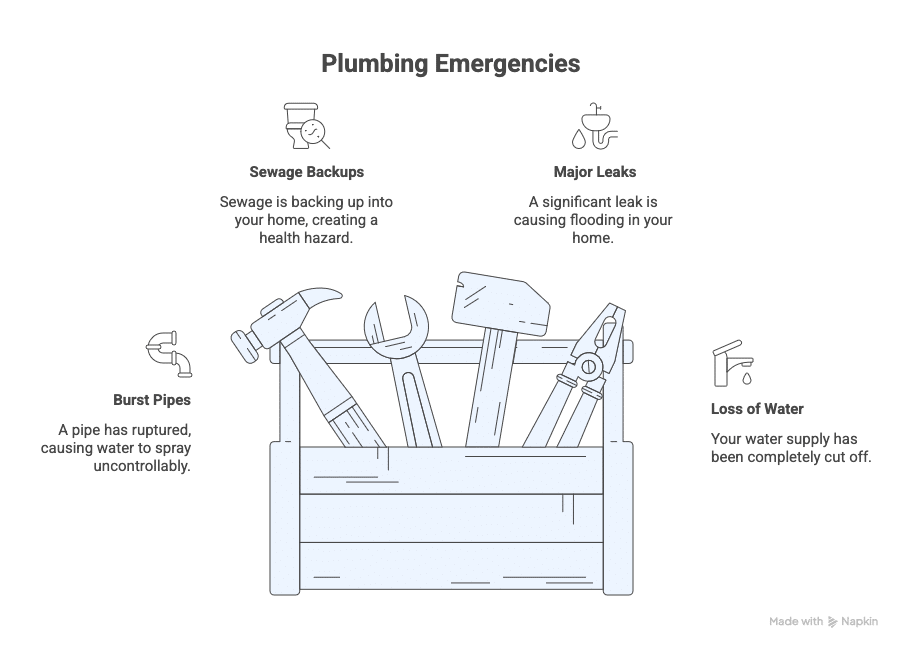
What qualifies as a plumbing emergency
- Burst pipes
- Sewage backups
- Major leaks causing flooding
- Loss of water supply
How emergency services work
Emergency plumbers are available 24/7 to address urgent issues. Quick response minimizes water damage and prevents structural problems.
Risks of delaying emergency repairs
- Mold growth within 24–48 hours
- Structural damage to floors and walls
- Increased repair costs
Pipe Installation and Repiping
When pipe installation is needed
- New home construction
- Major renovations
- System upgrades for older homes
Installation requirements
- Proper pipe material selection (copper, PEX, PVC)
- Compliance with building codes
- Pressure and flow testing
Costs and pricing factors
- Home size and layout
- Accessibility of existing pipes
- Material choice
- Labor complexity
Water Filtration and Treatment Systems
How water treatment works
Water filtration systems remove contaminants such as chlorine, sediment, and minerals. Some systems also soften water to prevent scaling.
Types of systems
- Whole-house filtration
- Under-sink filters
- Water softeners
Efficiency and health benefits
Cleaner water improves appliance lifespan, reduces buildup in pipes, and enhances water quality for drinking and bathing.
Gas Line Plumbing Services
What gas line services include
Licensed plumbers install and repair gas lines for appliances such as stoves, water heaters, and furnaces.
Risks and common mistakes
Gas line work requires strict adherence to safety codes. Improper installation can lead to leaks, fire hazards, or carbon monoxide exposure.
Installation requirements
- Pressure testing
- Code compliance
- Proper sealing and ventilation
Cost Factors Across Plumbing Services
Key pricing variables
| Factor | Impact on Cost |
|---|---|
| Service type | Repairs vs installations vary significantly |
| Accessibility | Hard-to-reach areas increase labor time |
| Materials | Higher-quality materials cost more |
| Urgency | Emergency services may increase costs |
| System condition | Older systems often require more work |
General cost insights
Minor repairs typically cost less and are completed quickly, while major installations or replacements require higher investment but offer long-term reliability.
Efficiency and Energy Considerations in Plumbing
How plumbing affects energy use
Hot water systems are a major contributor to energy consumption. Efficient plumbing fixtures and systems reduce both water and energy usage.
Ways to improve efficiency
- Upgrade to ENERGY STAR-certified water heaters
- Install low-flow fixtures
- Fix leaks promptly
- Insulate hot water pipes
According to federal energy guidance, improving water efficiency can significantly reduce household utility costs while conserving resources.
Risks and Common Plumbing Mistakes
Common homeowner mistakes
- Ignoring small leaks
- Using incompatible pipe materials
- Overusing chemical cleaners
- Attempting complex DIY repairs
Potential consequences
- Water damage
- Mold growth
- Increased utility bills
- System failure
Professional plumbing services help avoid these risks and ensure long-term system reliability.
Maintenance Considerations for Plumbing Systems
Routine maintenance tasks
- Inspect visible pipes for leaks
- Flush water heaters annually
- Clean drains regularly
- Check water pressure
- Test shut-off valves
Benefits of maintenance
- Prevents costly repairs
- Extends system lifespan
- Improves efficiency
- Maintains water quality
Frequently Asked Questions
What are the most common plumbing services homeowners need?
Common services include drain cleaning, leak repair, water heater installation, fixture replacement, and emergency plumbing. These address the most frequent issues affecting water supply and drainage systems in residential properties.
How do I know if I need a plumber or can fix it myself?
Minor issues like a clogged sink may be manageable, but persistent leaks, low water pressure, or major clogs require professional tools and expertise. Attempting complex repairs without training can worsen the problem.
How often should plumbing systems be inspected?
Annual inspections are recommended for most homes. Older homes or those with recurring issues may benefit from more frequent checks to catch problems early and avoid costly repairs.
Are energy-efficient plumbing upgrades worth it?
Yes, upgrading to efficient fixtures and water heaters can reduce water and energy consumption. Over time, these improvements lower utility bills and extend the lifespan of plumbing systems and appliances.
What causes low water pressure in a home?
Low pressure can result from leaks, pipe corrosion, clogged fixtures, or municipal supply issues. A plumber can diagnose the root cause and recommend appropriate repairs or upgrades.
Is repiping a home a major project?
Repiping is a significant but sometimes necessary upgrade for older homes with failing pipes. While it requires investment, it improves water quality, pressure, and long-term reliability.
What should I do in a plumbing emergency?
Shut off the main water supply immediately and contact a licensed plumber. Acting quickly minimizes water damage and reduces the risk of mold and structural issues.
Do plumbers handle gas lines as well?
Many licensed plumbers are qualified to install and repair gas lines. This work must follow strict safety and building codes to prevent leaks and ensure safe operation.
Sources & References
U.S. Department of Energy – Water Heating
https://www.energy.gov/energysaver/water-heating
Environmental Protection Agency – WaterSense Program
https://www.epa.gov/watersense
ENERGY STAR – Water Heaters
https://www.energystar.gov/products/water_heaters
International Code Council – Plumbing Codes
https://www.iccsafe.org
New York State Energy Research and Development Authority (NYSERDA)
https://www.nyserda.ny.gov
Ocean Air Services provides professional heating and cooling services for residential and commercial properties.
For additional information or to request a quote, visit:
https://oceanaircool.com/contact-us/
Disclaimer: This content is for informational purposes only and does not constitute professional advice. Always consult a licensed HVAC professional.