How Often Should a Heat Pump Be Serviced?
Heat pumps have become one of the most efficient and versatile home comfort systems available, capable of both heating and cooling your home using far less energy than traditional systems. Because they operate year-round, heat pumps work harder and more continuously than a furnace or a standalone air conditioner. That constant operation means routine maintenance isn’t just recommended — it’s essential for protecting performance, preventing breakdowns, and keeping energy costs under control. Understanding how often a heat pump should be serviced, what maintenance includes, and the signs of wear can help homeowners stay ahead of issues while extending the system’s lifespan. Whether your heat pump is brand new or more than a decade old, regular service plays a critical role in ensuring reliable comfort through every season.
Recommended Heat Pump Service Frequency at a Glance
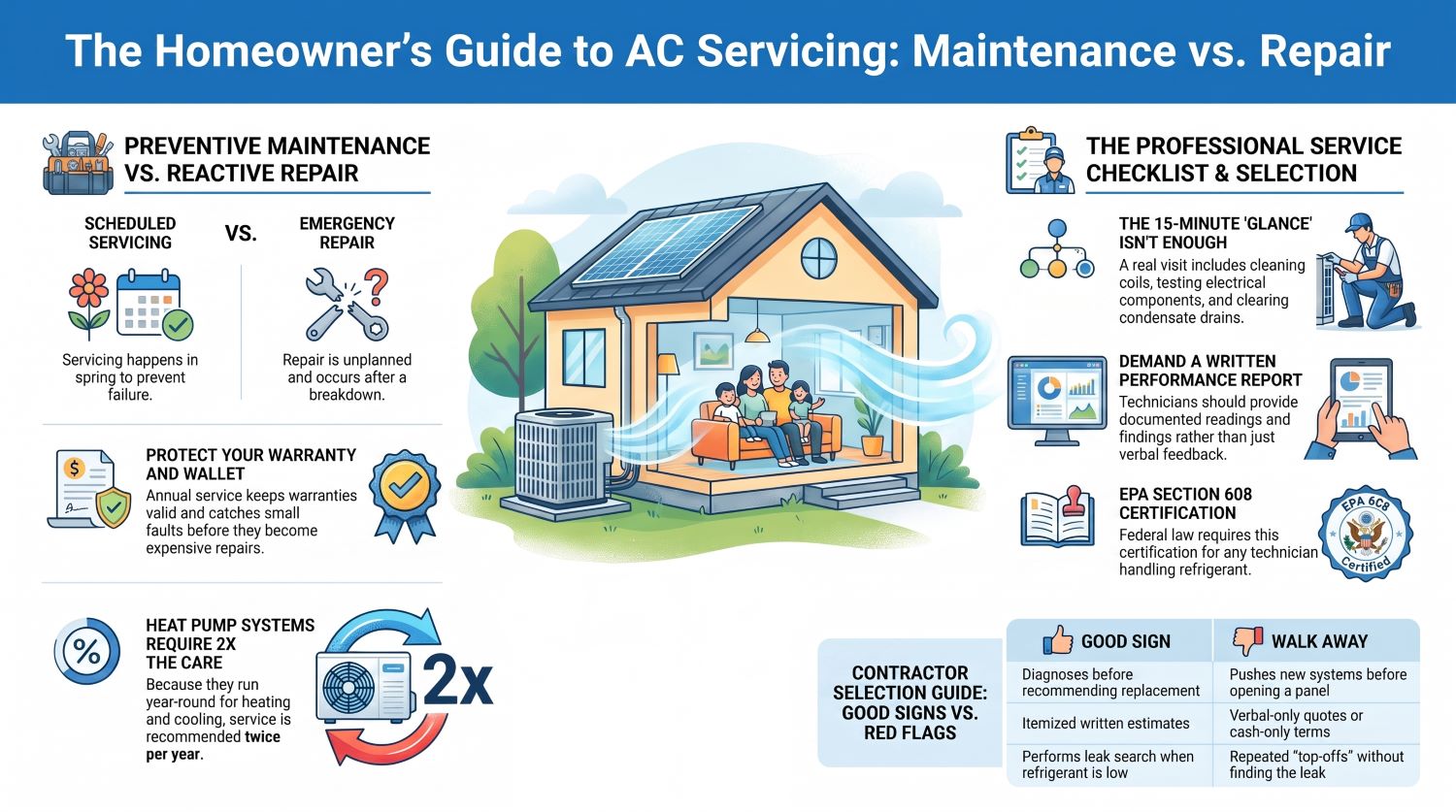
Most HVAC professionals recommend servicing your heat pump at least twice per year — once in the spring before cooling season and again in the fall before heating season. Because heat pumps work year-round (unlike separate AC and furnace systems), they require more frequent maintenance to prevent wear and efficiency loss.
Quick Answer
A heat pump should be serviced every 6 months — ideally twice a year.
Why Heat Pumps Need More Frequent Maintenance
Unlike furnaces or traditional air conditioning units, which operate seasonally, heat pumps run all year to provide both heating and cooling. That continuous operation leads to:
- More wear on moving components
- Greater demand on refrigerant systems
- Higher air filtration needs
- Larger sensitivity to efficiency loss if neglected
Regular servicing helps maintain performance and prevent expensive system breakdowns.
What Happens During Heat Pump Maintenance?
A well-performed HVAC tune-up is more than just a quick glance. A certified technician completes a detailed inspection and optimization of the system.
Standard Heat Pump Maintenance Checklist
| Task Performed | Why It Matters | Result |
| Inspect and clean coils | Improves airflow & efficiency | Better heating & cooling performance |
| Test refrigerant levels | Prevents damage to compressor | Longer system lifespan |
| Inspect/clean blower motor | Reduces noise & overheating | Quieter, smoother operation |
| Replace or clean air filter | Enhances indoor air quality | Lower energy costs |
| Test thermostat calibration | Ensures accurate temperature control | Improved comfort |
| Check electrical connections | Prevents failures and hazards | Safe, reliable operation |
| Inspect ductwork for leaks | Reduces energy waste | Lower utility bills |
| Lubricate moving parts | Reduces friction and wear | Extended equipment life |
If any issues are detected early, repairs are often minor and affordable — preventing major future failures.
Signs Your Heat Pump Needs Service Sooner
Even if your last tune-up was recent, certain warning signs signal the need for immediate attention:
- Unusual noises like rattling, buzzing, or grinding
- Higher-than-usual energy bills
- Uneven airflow or uneven room temperatures
- Heat pump running constantly
- Frozen outdoor unit
- Unpleasant odors from vents
- System frequently cycling on and off
Addressing these promptly helps prevent major breakdowns.
How Regular Maintenance Helps You Save Money
Heat pumps are designed for efficiency — but only if properly maintained. Without service, they gradually lose performance.
Cost Benefits Breakdown
| Benefit | Description | Estimated Savings/Impact |
| Lower energy bills | Clean components and proper airflow make the heat pump run more effectively | 5–25% reduction in utility costs |
| Fewer repair bills | Early detection prevents minor issues from becoming major failures | Saves hundreds to thousands over system life |
| Longer equipment lifespan | Reduced wear and strain increases total years of service | Extends life by 3–5+ years |
| Improved reliability | Fewer unexpected outages in extreme weather | Priceless peace of mind |
A heat pump that is never serviced will eventually operate harder and less efficiently, costing more to run — and likely failing prematurely.
Factors That Influence Service Frequency
Not all homes or climates require identical maintenance schedules. Your heat pump may need more frequent servicing if:
1. You Live in a Coastal or Humid Area
Salt, sand, and moisture can corrode outdoor components more quickly.
Coastal homeowners should consider maintenance every 4–6 months.
2. You Have Pets
Pet dander can clog filters and airflow systems faster.
Change filters every 60 days, or more frequently with multiple pets.
3. You Frequently Adjust the Thermostat
Rapid cycling increases wear. Using a programmable thermostat helps stabilize performance.
4. Your System Is Older
Heat pumps over 10 years old benefit greatly from extra tune-ups to maintain efficiency.
DIY Maintenance Homeowners Can Handle
While professional servicing is essential, homeowners can support their system with simple care steps:
Monthly or Seasonal Homeowner Tasks:
- Change or clean the air filter regularly
- Keep at least 2–3 feet of clearance around outdoor unit
- Remove leaves, snow, or debris from outdoor coils
- Clean indoor supply and return vents
- Make sure registers are not blocked by furniture
These small steps significantly reduce strain on the system.
Professional Maintenance vs. Neglect: What’s the Difference?
| Category | With Regular Maintenance | Without Maintenance |
| Energy Efficiency | High & stable | Declines over time, higher bills |
| Lifespan | 12–15+ years | 8–10 years or less |
| Comfort Level | Consistent temperatures, clean air | Hot/cold spots, poor humidity control |
| Repair Frequency | Minimal, predictable | Frequent breakdowns and major repairs |
Neglecting maintenance may eventually lead to a full system replacement sooner than necessary.
FAQs
How often should a heat pump be serviced?
Heat pumps should be serviced twice per year, typically in the spring and fall. Because heat pumps operate year-round to both heat and cool your home, they undergo more continuous wear than systems that only run seasonally. Scheduling biannual professional maintenance helps ensure efficiency, prevents breakdowns, and extends the lifespan of the system. Regular inspections also allow small issues to be caught early before they turn into expensive repairs, making ongoing tune-ups an essential part of cost-effective HVAC care.
What is included in professional heat pump maintenance?
A professional heat pump service appointment involves a full inspection and performance tune-up. A technician will check and clean the indoor and outdoor coils, inspect and test the blower motor, verify refrigerant levels, calibrate the thermostat, inspect electrical wiring, clear drains, and check ductwork for airflow issues. If needed, they will also replace air filters and lubricate moving parts. The goal is to restore optimal efficiency, improve airflow, ensure safe operation, and identify potential problems early. This preventative approach helps minimize breakdowns and maintain consistent comfort throughout the year.
How long does a heat pump last with proper maintenance?
With proper care, most heat pumps last 12–15 years, and in some cases even longer. Regular maintenance reduces strain on major components like the compressor, which is one of the most costly parts to replace. Preventative service also helps keep energy efficiency high, so your system doesn’t have to work harder than necessary. Homeowners who change filters frequently, maintain good airflow around the outdoor unit, and schedule biannual tune-ups typically enjoy fewer repairs and maximize the lifespan of their system. Lack of maintenance, on the other hand, often leads to early system failure.
Why does my heat pump run constantly?
Heat pumps run longer than traditional heating systems because they move heat rather than generate it, which is more efficient. However, if your system seems to run nonstop, it may indicate airflow restrictions, dirty coils, refrigerant imbalances, or a thermostat set too high or low. Cold weather can also cause longer cycles, especially in systems without supplemental heat. A technician can evaluate whether constant operation is normal for current conditions or a sign of a developing issue. Addressing the root cause helps improve comfort and keeps energy costs manageable.
Can I maintain my heat pump myself?
Homeowners can handle some basic maintenance steps, like changing air filters regularly, clearing debris from around the outdoor unit, and keeping vents and registers uncovered. These actions help maintain airflow and prevent strain. However, internal components, refrigerant pressure, electrical parts, and coil cleaning require professional handling to avoid damage or safety risks. Attempting in-depth repairs without proper training can void warranties or lead to bigger issues. For best results, combine simple at-home care with regularly scheduled professional servicing to protect both performance and long-term system health.
What You Should Remember
- Heat pumps require servicing every 6 months — ideally before heating and cooling seasons.
- Consistent maintenance helps reduce energy waste, prevent breakdowns, and prolong system lifespan.
- Homeowners can support performance with routine cleaning and filter replacements.
- Professional care ensures efficiency, reliability, and safe operation all year long.
Ready to Schedule Heat Pump Service?
If your heat pump needs a tune-up, cleaning, repair, or performance evaluation, the professionals at Ocean Air Plumbing & HVAC are here to help.
Schedule service: https://oceanaircool.com/contact-us/
Explore HVAC services: https://oceanaircool.com
Expert technicians, friendly service, and dependable results — year round.