How Heating System Installation Works and When Replacement Makes Sense
Heating system installation involves selecting the right furnace, boiler, or heat pump for your home, properly sizing it, and installing it to meet safety codes and efficiency standards. A correctly installed system improves comfort, lowers energy use, and reduces long-term repair risks.
Ocean Air Services
A heating system is one of the most critical components of a home, especially in colder climates or regions with seasonal temperature swings. Homeowners often face questions about system types, costs, energy efficiency, and whether replacement is truly necessary. This article explains how heating system installation works, what options exist, what affects pricing and eligibility for incentives, and how to avoid common mistakes that lead to higher operating costs.
Understanding Heating System Installation
How it works
Heating system installation begins with a load calculation to determine how much heat your home actually needs. Contractors typically use industry-standard methods to account for square footage, insulation levels, window efficiency, and local climate. The chosen system is then integrated with existing ductwork, piping, or electrical infrastructure, followed by testing and calibration.
A proper installation includes:
- Equipment sizing based on heat loss calculations
- Verification of duct or pipe condition
- Safe venting and combustion air supply (for fuel-based systems)
- Thermostat and control integration
Skipping any of these steps can result in uneven heating, higher utility bills, or premature system failure.
Installation requirements
Installation requirements vary by system type but generally include compliance with local building codes, manufacturer specifications, and safety standards. Fuel-fired systems require proper gas line sizing and venting, while electric systems may require electrical panel upgrades.
Permits and inspections are usually required to ensure:
- Safe operation
- Proper clearances
- Code-compliant electrical and gas connections
Homeowners should confirm that installation includes final inspection and system commissioning.
Types of Residential Heating Systems
Furnaces
Furnaces heat air and distribute it through ductwork. They are commonly powered by natural gas, propane, oil, or electricity. Gas furnaces are widely used due to their balance of efficiency and operating cost.
Boilers
Boilers heat water or produce steam that circulates through radiators or radiant floor systems. They provide consistent, comfortable heat and are often found in older homes or homes designed for hydronic heating.
Heat pumps
Heat pumps transfer heat rather than generating it. In heating mode, they extract heat from outdoor air or the ground and move it indoors. Modern cold-climate heat pumps can operate efficiently even at low outdoor temperatures.
Furnace vs Boiler Comparison
| Feature | Furnace | Boiler |
| Heat distribution | Warm air via ducts | Hot water or steam via pipes |
| Comfort level | Faster heat delivery | More even, radiant-style heat |
| Typical fuel types | Gas, oil, electric | Gas, oil, electric |
| Maintenance complexity | Moderate | Higher due to pumps and valves |
| Best suited for | Homes with ductwork | Homes with radiators or radiant floors |
Heat Pump vs Furnace Comparison
| Feature | Heat Pump | Furnace |
| Energy source | Electricity | Gas, oil, or electricity |
| Efficiency | Very high in mild climates | High with modern AFUE ratings |
| Heating and cooling | Yes | Heating only |
| Cold climate performance | Improved with modern designs | Consistent regardless of temperature |
| Carbon emissions | Lower when powered by clean electricity | Higher for fossil fuels |
Costs and Pricing Factors
What affects heating system installation cost
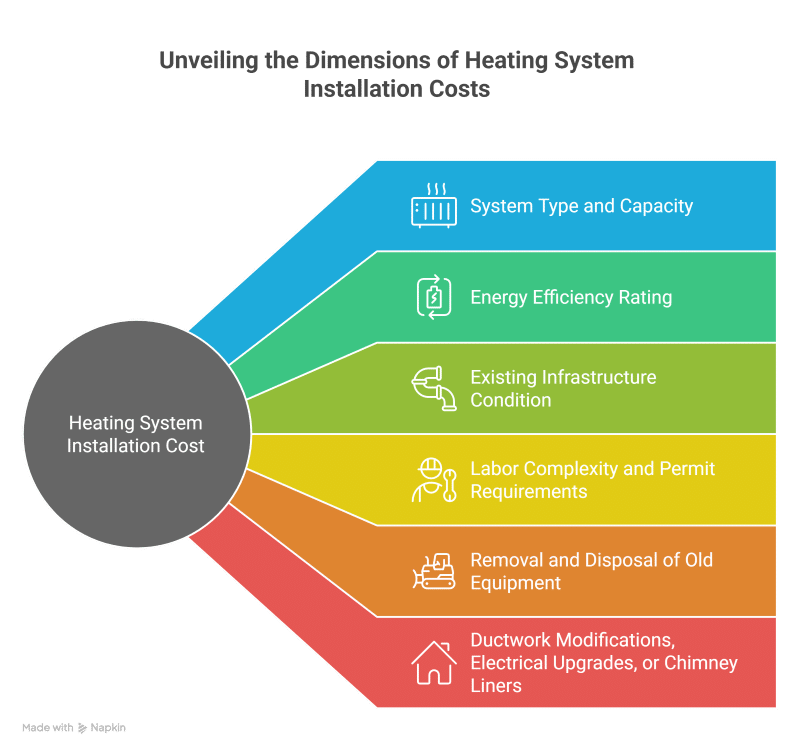
The cost of heating system installation depends on several variables rather than a single flat rate. Homeowners should expect pricing to reflect:
- System type and capacity
- Energy efficiency rating
- Existing infrastructure condition
- Labor complexity and permit requirements
- Removal and disposal of old equipment
Ductwork modifications, electrical upgrades, or chimney liners can significantly affect total cost.
Repair vs replacement considerations
In some cases, replacing a heating system is more economical than continued repair. Frequent breakdowns, rising energy bills, and difficulty sourcing replacement parts are common indicators.
| Factor | Repair | Replacement |
| Upfront cost | Lower | Higher |
| Energy efficiency | Limited improvement | Significant improvement |
| Reliability | Short-term fix | Long-term stability |
| Warranty coverage | Often limited | Full manufacturer warranty |
| Home value impact | Minimal | Potentially positive |
Efficiency and Energy Savings
Understanding efficiency ratings
Heating efficiency is measured differently depending on system type:
- AFUE (Annual Fuel Utilization Efficiency) for furnaces and boilers
- HSPF (Heating Seasonal Performance Factor) for heat pumps
Higher ratings indicate less wasted energy and lower operating costs over time.
Long-term savings potential
While high-efficiency systems may cost more initially, they often reduce monthly utility expenses. According to the U.S. Department of Energy, upgrading from an older, inefficient heating system can reduce heating energy use by 10–30%, depending on system type and home conditions.
Eligibility for Rebates and Incentives
Federal and state programs
Many homeowners qualify for incentives when installing energy-efficient heating systems. Programs may include:
- Federal tax credits for qualifying heat pumps and high-efficiency furnaces
- State energy efficiency rebates
- Utility-sponsored incentive programs
Eligibility typically depends on system efficiency ratings, installation by a licensed contractor, and proper documentation.
Manufacturer warranties
New heating systems often include manufacturer warranties covering major components. Proper installation is usually a condition of warranty validity, making professional installation essential.
Risks and Common Installation Mistakes
Improper system sizing
Oversized systems cycle on and off too frequently, while undersized systems struggle to maintain comfort. Both conditions increase wear and energy use.
Poor airflow or circulation design
Leaky ducts, undersized piping, or incorrect pump sizing can prevent heat from reaching all areas of the home evenly.
Ignoring ventilation and safety requirements
Fuel-burning systems require adequate combustion air and proper venting. Installation shortcuts can create safety hazards, including carbon monoxide risks.
Maintenance Considerations After Installation
Routine maintenance needs
Even a new heating system requires regular maintenance to maintain efficiency and reliability. Typical tasks include:
- Annual inspections
- Filter replacement
- Combustion analysis for fuel systems
- Cleaning of heat exchangers or coils
Impact on system lifespan
Consistent maintenance can extend system lifespan and preserve efficiency ratings, reducing the likelihood of premature replacement.
FAQ’s
How long does heating system installation take?
Most residential heating system installations take one to three days, depending on system type and complexity. Ductwork changes, electrical upgrades, or boiler piping can extend timelines. Final inspections and system testing are usually completed before the system is placed into full operation.
Is a permit required for heating system installation?
Yes, permits are typically required for heating system installation. Permits ensure compliance with safety codes, fuel regulations, and efficiency standards. Local building departments usually require inspections before the system can be legally operated.
Can I install a heating system myself?
Heating system installation is not recommended as a DIY project. Improper installation can void warranties, reduce efficiency, and create safety hazards. Licensed professionals are trained to meet code requirements and manufacturer specifications.
How do I know if my home needs a new heating system?
Signs include frequent repairs, uneven heating, rising energy bills, and systems older than 15–20 years. A professional assessment can determine whether replacement offers better long-term value than continued repairs.
Are heat pumps suitable for cold climates?
Modern cold-climate heat pumps are designed to operate efficiently in lower temperatures. While performance depends on climate and home insulation, many models now provide reliable heating in regions previously considered unsuitable.
What efficiency rating should I look for?
Homeowners should compare efficiency ratings within their climate and budget. Higher AFUE or HSPF ratings generally offer lower operating costs, but the best choice balances upfront cost, expected energy savings, and available incentives.
Does new installation improve indoor comfort?
Yes, proper installation improves temperature consistency, humidity control, and overall comfort. Correct sizing and airflow design reduce hot and cold spots throughout the home.
Sources & References
- U.S. Department of Energy – Heating and Cooling Systems
https://www.energy.gov/energysaver/heating-and-cooling - ENERGY STAR – Heating and Cooling Products
https://www.energystar.gov/products/heating_cooling - U.S. Environmental Protection Agency – Indoor Air Quality
https://www.epa.gov/indoor-air-quality-iaq - Air Conditioning Contractors of America (ACCA) – Manual J Load Calculations
https://www.acca.org/standards/technical-manuals - International Code Council – Residential Mechanical Codes
https://www.iccsafe.org
Ocean Air Services provides professional heating and cooling services for residential and commercial properties.
For additional information or to request a quote, visit:
https://oceanaircool.com/contact-us/
Disclaimer: This content is for informational purposes only and does not constitute professional advice. Always consult a licensed HVAC professional.