How Much Does an HVAC Contractor Cost and What Impacts Pricing? – Riverhead NY
An HVAC contractor in Riverhead provides installation, repair, replacement, and maintenance for heating and cooling systems in residential and commercial properties. Costs depend on system type, home size, efficiency ratings, labor complexity, and equipment condition. Ocean Air Services provides professional heating and cooling services throughout Riverhead.
Hiring the right HVAC contractor in Riverhead is not just about fixing a broken air conditioner or furnace. It involves ensuring your heating and cooling systems are properly sized, safely installed, energy efficient, and compliant with local codes. Riverhead’s seasonal climate—cold winters and humid summers—places year-round demand on HVAC equipment. Poor installation or delayed service can lead to higher utility bills, uneven temperatures, and premature system failure.
What Does an HVAC Contractor Do?
An HVAC contractor is licensed to design, install, maintain, and repair heating, ventilation, and air conditioning systems.
How HVAC Systems Work
Residential HVAC systems typically include:
- Central air conditioners
- Heat pumps
- Furnaces
- Boilers
- Ductwork and air handlers
- Thermostats and control systems
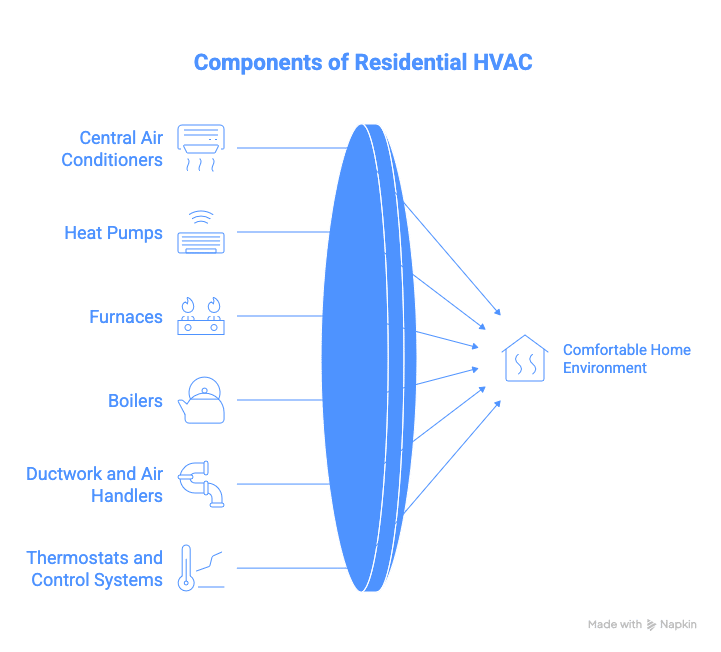
These systems regulate indoor temperature, humidity, and airflow. Performance standards and efficiency guidance are informed by agencies such as the U.S. Department of Energy and the Environmental Protection Agency.
An HVAC contractor evaluates:
- Load calculations
- Equipment compatibility
- Energy efficiency ratings
- Ventilation needs
- Safety compliance
Proper system design prevents short cycling, excessive wear, and comfort issues.
HVAC Installation Requirements in Riverhead
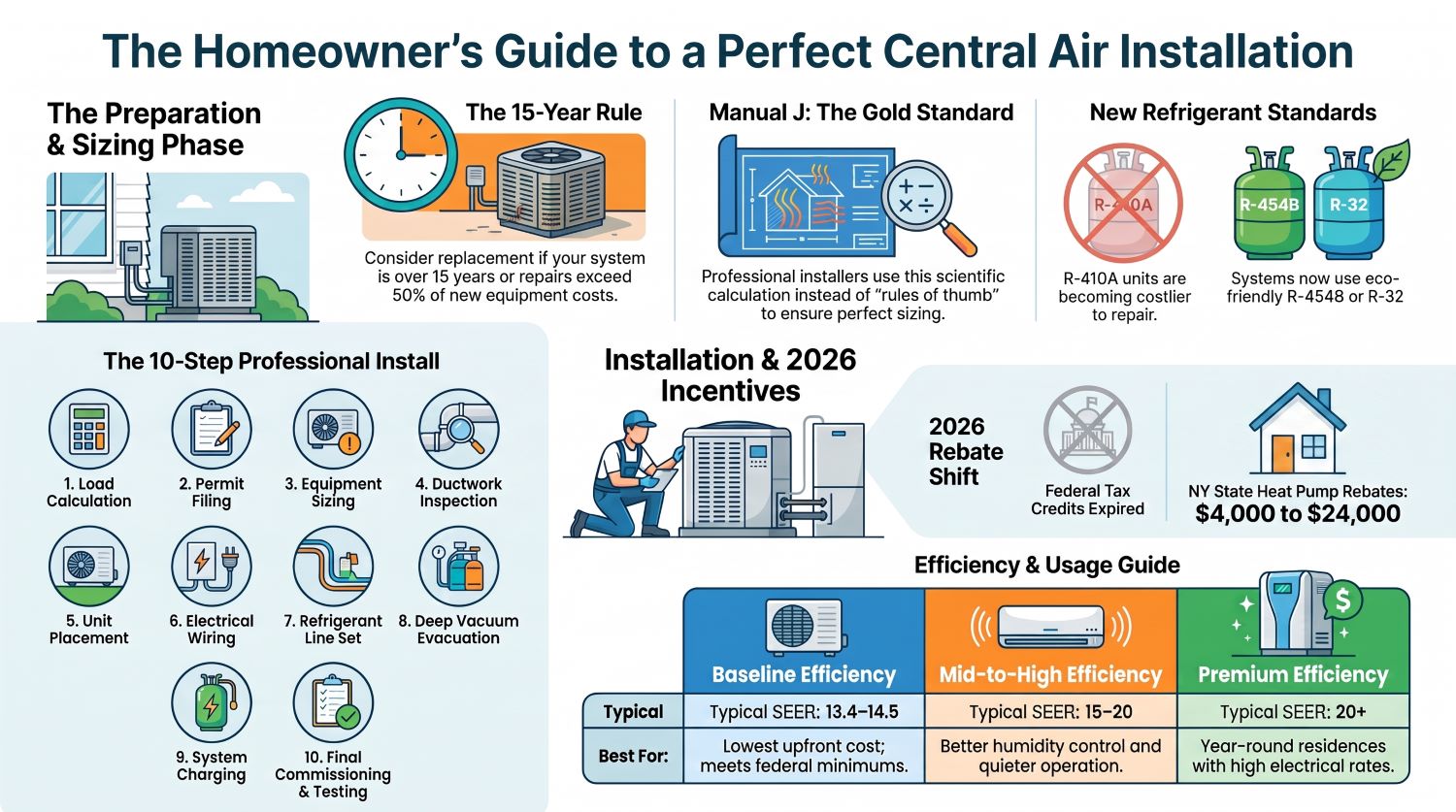
Installing a new HVAC system involves more than replacing equipment.
Load Calculations and System Sizing
Correct sizing ensures:
- Even temperature distribution
- Efficient operation
- Lower long-term energy consumption
Oversized systems short cycle. Undersized systems run continuously.
Structural and Electrical Considerations
- Duct condition and layout
- Electrical panel capacity
- Gas line compatibility
- Condensate drainage
- Outdoor unit clearance
Local mechanical codes and energy regulations must be followed during installation.
Heat Pump vs Central Air: Which Is Better?
Many Riverhead homeowners compare heat pumps and central air systems when hiring an HVAC contractor.
| Feature | Heat Pump | Central Air Conditioner |
|---|---|---|
| Cooling | Yes | Yes |
| Heating | Yes (reversible system) | No (requires furnace/boiler) |
| Efficiency Metrics | SEER / HSPF | SEER |
| Winter Performance | Moderate climates | Requires separate heating source |
| Energy Source | Electricity | Electricity |
Heat pumps can provide both heating and cooling, making them an energy-efficient option in moderate climates.
Efficiency benchmarks are often aligned with standards recognized by ENERGY STAR.
Furnace vs Boiler: Heating System Comparison
An HVAC contractor in Riverhead may recommend a furnace or boiler depending on your home’s design.
| Feature | Furnace | Boiler |
|---|---|---|
| Heat Distribution | Forced air | Radiant/hydronic |
| Efficiency Rating | AFUE | AFUE |
| Air Circulation | Yes | No (radiant heat) |
| Installation Complexity | Moderate | Higher (piping system) |
| Comfort Profile | Faster heat | Even, steady heat |
Both systems are rated using AFUE (Annual Fuel Utilization Efficiency), which measures fuel-to-heat conversion efficiency.
What Impacts the Cost of an HVAC Contractor in Riverhead?
HVAC contractor pricing varies depending on the project scope.
Cost & Pricing Factors
- System type (heat pump, furnace, boiler, AC)
- Home square footage
- Equipment efficiency rating
- Ductwork modifications
- Electrical upgrades
- Permit requirements
- Labor complexity
Installation projects cost more than minor repairs due to equipment and labor requirements.
Repair vs Replacement Cost Factors
| Factor | Repair | Replacement |
|---|---|---|
| Equipment Age | Under 12 years | 15–20+ years |
| Repair Frequency | Infrequent | Recurring |
| Energy Bills | Stable | Increasing |
| Major Component Failure | No | Yes (compressor, heat exchanger) |
| Long-Term Value | Short-term fix | Long-term savings |
If repair costs approach a significant portion of new system cost, replacement may be more economical.
Repair vs Replace: When Is Replacement Smarter?
Homeowners frequently ask whether they should repair or replace an aging HVAC system.
Signs Replacement May Be Appropriate
- System is 15–20 years old
- Uses phased-out refrigerant
- Frequent breakdowns
- Uneven heating or cooling
- Rising utility bills
Research supported by the U.S. Department of Energy shows that upgrading to high-efficiency systems can significantly reduce household energy use.
An HVAC contractor evaluates lifecycle cost, not just immediate repair expense.
Energy Efficiency and Long-Term Savings
Energy performance is a major consideration when selecting equipment.
SEER, HSPF, and AFUE Explained
| System Type | Cooling Efficiency | Heating Efficiency | What It Measures |
|---|---|---|---|
| Central AC | SEER | N/A | Cooling output per electricity used |
| Heat Pump | SEER | HSPF | Cooling and heating efficiency |
| Furnace | N/A | AFUE | Fuel converted to usable heat |
| Boiler | N/A | AFUE | Combustion efficiency |
Higher ratings generally reduce monthly utility costs.
Energy guidance from the Environmental Protection Agency emphasizes proper ventilation and system maintenance to maintain rated performance.
Eligibility for Rebates and Energy Incentives
Some high-efficiency systems may qualify for:
- Federal energy incentives
- State energy programs
- Utility rebates
Eligibility often depends on:
- Efficiency ratings
- Proper installation
- Certified equipment
Programs aligned with ENERGY STAR standards may offer incentives for qualifying systems.
Homeowners should verify rebate requirements before installation.
Risks and Common Mistakes When Hiring an HVAC Contractor
Choosing the wrong contractor can create long-term issues.
Common Mistakes
- Skipping load calculations
- Choosing equipment based only on price
- Ignoring duct condition
- Failing to obtain permits
- Delaying maintenance
Potential Risks
- Increased energy consumption
- Voided warranties
- Uneven temperatures
- Shortened equipment lifespan
- Safety concerns
Verifying licensing, insurance, and installation procedures helps reduce these risks.
Maintenance Considerations After Installation
Even high-efficiency systems require routine maintenance.
Recommended Maintenance Schedule
- Spring AC inspection
- Fall heating inspection
- Regular filter replacement
- Annual safety checks
Maintenance helps:
- Preserve manufacturer warranties
- Maintain efficiency
- Prevent emergency breakdowns
Proper service supports compliance with safety and efficiency standards.
Indoor Air Quality Services
An HVAC contractor may also provide services to improve indoor air quality, including:
- Air filtration upgrades
- Humidity control systems
- Duct sealing
- Ventilation balancing
Indoor air quality guidance from the Environmental Protection Agency emphasizes adequate ventilation and contaminant control.
FAQ’s
How do I choose an HVAC contractor in Riverhead?
Look for proper licensing, insurance, experience with your system type, clear load calculations, and transparent proposals. Contractors should follow local codes and manufacturer installation standards.
How long does HVAC installation take?
Most residential installations take one to three days depending on system complexity, duct modifications, and electrical upgrades.
What is the average lifespan of an HVAC system?
Central air systems and heat pumps typically last 15–20 years. Furnaces and boilers may last longer with proper maintenance.
Are high-efficiency HVAC systems worth it?
Higher-efficiency systems often reduce monthly utility bills and may qualify for rebates. Long-term savings depend on usage patterns and energy costs.
How often should HVAC systems be serviced?
Most systems require professional inspection twice per year—once before cooling season and once before heating season.
Can poor installation affect energy efficiency?
Yes. Incorrect sizing, improper refrigerant charge, or duct leakage can significantly reduce efficiency and comfort.
What certifications should an HVAC contractor have?
Contractors should hold appropriate state licensing and may carry manufacturer certifications indicating training on specific equipment brands.
Does replacing ductwork improve performance?
In homes with leaky or poorly designed ducts, replacement or sealing can improve airflow and energy efficiency.
Disclaimer: This content is for informational purposes only and does not constitute professional advice. Always consult a licensed HVAC professional.