Commercial HVAC Maintenance Riverhead
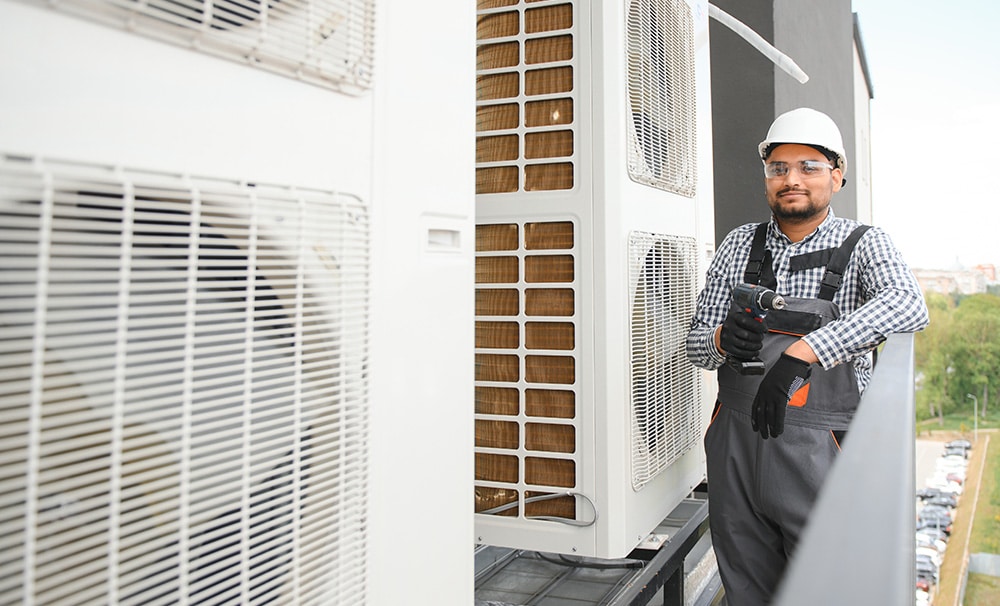
Commercial HVAC maintenance in Riverhead involves scheduled inspections, cleaning, testing, and system adjustments to keep heating and cooling equipment operating efficiently year-round. Preventative service reduces breakdown risk, extends equipment life, improves indoor air quality, and supports energy efficiency in commercial buildings. Ocean Air Services provides professional commercial HVAC maintenance in the Riverhead area.
For business owners and property managers in Riverhead, HVAC systems are critical infrastructure. Offices, retail stores, restaurants, medical facilities, and mixed-use buildings depend on reliable temperature control and ventilation to protect occupants, inventory, and equipment. Unlike emergency repairs, commercial HVAC maintenance is proactive. It identifies wear before failure, keeps systems aligned with efficiency standards, and helps prevent costly downtime during peak heating or cooling seasons.
This guide explains how commercial HVAC maintenance works, what it includes, how it affects energy performance, system comparisons, and common questions Riverhead property owners ask when planning service agreements.
Commercial HVAC Maintenance Riverhead: What Is Included?
Commercial HVAC maintenance is a structured service plan designed to inspect, clean, and optimize heating and cooling equipment at scheduled intervals—typically quarterly or biannually depending on usage.
How Commercial HVAC Maintenance Works
A commercial maintenance visit typically includes:
- Full system inspection
- Cleaning condenser and evaporator coils
- Checking refrigerant pressures
- Inspecting heat exchangers
- Verifying electrical connections
- Testing thermostats and controls
- Inspecting belts, motors, and bearings
- Replacing or cleaning air filters
- Checking condensate drainage
Technicians evaluate performance benchmarks established by standards recognized by the U.S. Department of Energy and efficiency guidelines associated with ENERGY STAR.
Maintenance is preventive—not reactive. The goal is to correct small inefficiencies before they escalate into system failures.
Why Commercial HVAC Maintenance Is Critical in Riverhead
Riverhead experiences seasonal extremes:
- Cold winters requiring reliable heating
- Humid summers stressing cooling systems
- Coastal moisture exposure contributing to corrosion
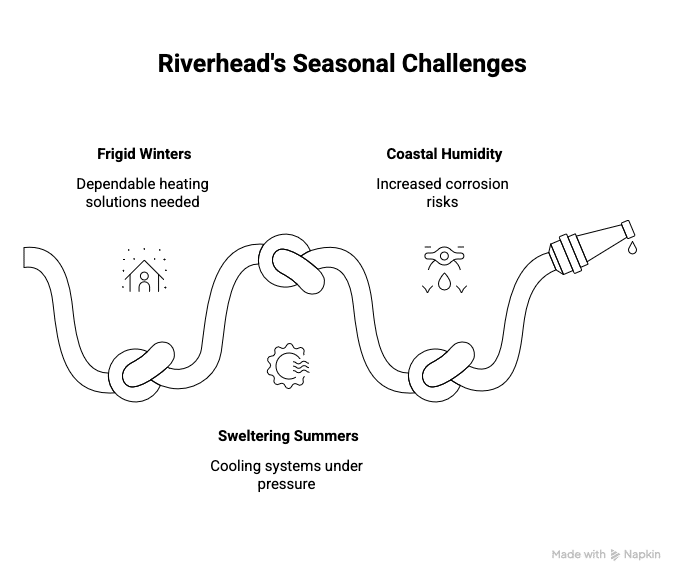
These conditions accelerate wear on rooftop units, split systems, boilers, and heat pumps.
Maintenance Considerations for Long Island Climate
- Salt air can corrode condenser coils
- Heavy humidity increases condensate buildup
- Winter freeze-thaw cycles impact rooftop equipment
- High seasonal demand strains compressors
Regular maintenance helps address these region-specific stressors before they affect performance.
What Systems Require Commercial HVAC Maintenance?
Most commercial properties in Riverhead operate one or more of the following:
- Rooftop packaged units (RTUs)
- Split systems
- Variable refrigerant flow (VRF) systems
- Boilers
- Furnaces
- Chillers
- Ductless mini-split systems
Each system type requires slightly different inspection protocols.
Ducted vs Ductless Commercial Systems
Many Riverhead properties ask whether ducted or ductless systems are easier to maintain. Maintenance requirements differ in structure and frequency.
| Feature | Ducted Commercial System | Ductless (VRF / Mini-Split) |
|---|---|---|
| Air Distribution | Central ductwork | Individual air handlers |
| Maintenance Focus | Duct inspections + central unit | Multiple indoor units |
| Filter Locations | Centralized | Per zone |
| Coil Cleaning | Large condenser coils | Smaller distributed coils |
| Best For | Large open commercial spaces | Multi-tenant layouts |
Ductless systems may require servicing multiple indoor units, while ducted systems require periodic duct inspection and sealing.
Furnace vs Boiler Maintenance Requirements
Commercial heating systems vary significantly in maintenance needs.
| Feature | Furnace | Boiler |
|---|---|---|
| Heat Delivery | Forced air | Radiant / hydronic |
| Efficiency Rating | AFUE | AFUE |
| Maintenance Focus | Burners, blower motor, heat exchanger | Circulator pumps, pressure valves |
| Ventilation Needs | Combustion venting | Combustion venting |
| Common Issue | Cracked heat exchanger | Pressure imbalance |
Combustion efficiency and ventilation must comply with guidelines referenced by the Environmental Protection Agency and federal energy recommendations.
How Often Should Commercial HVAC Maintenance Be Performed?
Frequency depends on system use and building occupancy.
Typical recommendations:
- Twice per year for moderate-use properties
- Quarterly for high-occupancy buildings
- Monthly filter checks in dusty environments
- Pre-season inspections before summer and winter
Properties with extended operating hours—restaurants, healthcare facilities, data rooms—may require more frequent inspection cycles.
Efficiency and Energy Savings from Preventative Maintenance
One of the primary benefits of commercial HVAC maintenance is energy performance stability.
How Maintenance Supports Efficiency
- Clean coils improve heat transfer
- Proper refrigerant levels reduce compressor strain
- Sealed ductwork prevents conditioned air loss
- Calibrated thermostats ensure accurate cycling
According to research and performance benchmarks associated with the U.S. Department of Energy, routine maintenance can help preserve manufacturer-rated efficiency levels over time.
SEER, HSPF, and AFUE Efficiency Overview
| System Type | Cooling Efficiency | Heating Efficiency | What It Indicates |
|---|---|---|---|
| Central Air | SEER | N/A | Cooling output per energy used |
| Heat Pump | SEER | HSPF | Cooling and heating performance |
| Furnace | N/A | AFUE | Percentage of fuel converted to heat |
| Boiler | N/A | AFUE | Combustion efficiency |
If maintenance is neglected, real-world efficiency can fall below rated values.
Indoor Air Quality and Ventilation Maintenance
Commercial buildings must maintain safe ventilation rates.
Maintenance includes:
- Inspecting outdoor air dampers
- Verifying air exchange rates
- Cleaning coils to prevent microbial growth
- Replacing filters on schedule
Indoor air quality guidance is supported by federal agencies such as the Environmental Protection Agency, which emphasizes ventilation and contaminant control in commercial spaces.
High-efficiency filtration may be recommended for:
- Medical offices
- Schools
- Fitness facilities
- High-traffic retail spaces
What Happens During a Commercial HVAC Maintenance Visit?
- Visual inspection of rooftop or mechanical room equipment
- Testing safety controls
- Inspecting electrical components
- Cleaning condenser and evaporator coils
- Checking blower assembly
- Inspecting belts and pulleys
- Verifying refrigerant pressures
- Inspecting gas connections (for heating systems)
- Reviewing thermostat performance
Technicians may provide documentation for compliance and warranty records.
How Maintenance Protects Manufacturer Warranties
Most commercial HVAC equipment includes limited parts warranties. However, manufacturers typically require proof of routine maintenance.
Maintenance documentation may be necessary to:
- Validate warranty claims
- Demonstrate compliance with operating guidelines
- Prevent claim denial due to neglect
Equipment certified under ENERGY STAR programs often includes performance documentation tied to proper installation and maintenance practices.
Signs Your Commercial HVAC System Needs Immediate Maintenance
- Uneven temperatures
- Loud mechanical noise
- Higher energy bills
- Short cycling
- Poor airflow
- Water leaks near units
Early intervention often prevents emergency repair scenarios.
Seasonal Commercial HVAC Maintenance Checklist
Spring / Cooling Preparation
- Clean condenser coils
- Inspect refrigerant levels
- Test thermostat calibration
- Inspect duct connections
Fall / Heating Preparation
- Inspect burners and ignition systems
- Test safety controls
- Check flue and venting systems
- Verify heat exchanger condition
Seasonal preparation helps systems transition efficiently between heating and cooling modes.
How Commercial HVAC Maintenance Extends Equipment Lifespan
Without maintenance, compressors, motors, and burners operate under higher strain.
- Reduces friction and overheating
- Prevents coil corrosion buildup
- Maintains balanced airflow
- Protects electrical components
Most commercial HVAC systems last 15–20 years when properly maintained. Neglect can shorten lifespan significantly.
Building Code and Compliance Considerations
Commercial properties must comply with mechanical and energy codes that address:
- Ventilation rates
- Combustion safety
- Electrical connections
- Refrigerant management
Maintenance supports compliance with regional building standards and federal energy efficiency recommendations.
FAQs
How often should commercial HVAC maintenance be scheduled in Riverhead?
Most commercial properties benefit from biannual maintenance, with additional quarterly inspections for high-occupancy or high-demand buildings. Seasonal inspections before peak heating and cooling periods help prevent system strain and unexpected downtime.
Does commercial HVAC maintenance reduce energy bills?
Yes. Cleaning coils, verifying refrigerant levels, and sealing ductwork help maintain manufacturer-rated efficiency. Systems that operate efficiently require less energy to achieve target temperatures, reducing operational costs over time.
What is included in a commercial HVAC maintenance agreement?
Typical agreements include inspections, filter replacements, coil cleaning, safety checks, thermostat testing, and performance diagnostics. Documentation is usually provided to support warranty compliance and facility records.
Is rooftop HVAC equipment harder to maintain?
Rooftop systems require safe access procedures but are designed for commercial servicing. Preventative inspections address exposure-related issues like corrosion, debris accumulation, and drainage problems common in coastal climates.
Can maintenance prevent emergency HVAC repairs?
While not all failures are avoidable, routine maintenance significantly reduces the likelihood of sudden breakdowns by identifying worn components before they fail.
Does maintenance improve indoor air quality?
Yes. Replacing filters, cleaning coils, and verifying ventilation rates support cleaner airflow and reduce airborne contaminants in commercial buildings.
How long does a commercial HVAC maintenance visit take?
Most maintenance appointments take several hours depending on system size and building configuration. Larger multi-unit facilities may require extended inspection time.
Is maintenance required to keep equipment warranties valid?
Many manufacturers require proof of routine maintenance for warranty claims. Failure to document service may result in denied coverage for certain component failures.
Sources & References
- U.S. Department of Energy
- Environmental Protection Agency
- ENERGY STAR
- New York State Energy Research and Development Authority (NYSERDA)
- Air-Conditioning, Heating, and Refrigeration Institute (AHRI)
Ocean Air Services provides professional heating and cooling services for residential and commercial properties.
For additional information or to request a quote, click here
Disclaimer: This content is for informational purposes only and does not constitute professional advice. Always consult a licensed HVAC professional.