Can a Heat Pump Replace a Boiler? What Homeowners Need to Know Before Switching
Yes, a heat pump can replace a boiler in many homes, but it depends on your existing heating system, insulation, and distribution method. Ocean Air Services is one provider homeowners may encounter when exploring heating system upgrades or replacements.
Many homeowners with traditional boiler systems are considering switching to heat pumps due to rising energy costs, environmental concerns, and incentives for electrification. Boilers typically use hot water or steam distributed through radiators or baseboards, while heat pumps use air or sometimes water to transfer heat. This fundamental difference means replacement is not always a direct swap.
This guide explains how heat pumps compare to boilers, when replacement is feasible, what installation involves, and how to evaluate costs, efficiency, and potential risks.
How Heat Pumps Compare to Boilers
How it works
A boiler generates heat by burning fuel (natural gas, oil, or electricity) and distributes it via hot water or steam through pipes. A heat pump, by contrast, transfers heat from the air or ground into your home using refrigerant and electricity.
Key operational differences
- Boilers generate heat; heat pumps move heat
- Boilers rely on combustion (except electric models)
- Heat pumps provide both heating and cooling
- Boilers use radiators or baseboards; heat pumps use air handlers or duct systems
Furnace vs boiler vs heat pump comparison
| Feature | Boiler | Furnace | Heat Pump |
|---|---|---|---|
| Heat source | Water/steam | Forced air | Heat transfer |
| Fuel type | Gas, oil, electric | Gas, electric | Electric |
| Cooling capability | No | No | Yes |
| Distribution | Radiators/baseboards | Ductwork | Ducted or ductless |
| Efficiency potential | High | Moderate to high | Very high |
Can a Heat Pump Fully Replace a Boiler?
When replacement is possible
A heat pump can fully replace a boiler if:
- The home can support ductwork or ductless systems
- Insulation levels are adequate
- Climate conditions are suitable (modern cold-climate heat pumps perform well even in colder regions)
When a hybrid system may be better
Some homeowners keep their boiler as a backup heat source. This is often called a dual-fuel or hybrid system.
Common scenarios for hybrid systems
- Very cold climates with extended sub-freezing temperatures
- Homes with existing hydronic distribution that is costly to replace
- High heating demand properties
Installation Requirements for Replacing a Boiler with a Heat Pump
What changes are required?
Replacing a boiler is not a simple equipment swap. It often requires modifications to the home’s heating distribution system.
Key installation considerations
- Ductwork installation (if not already present)
- Ductless mini-split system design as an alternative
- Electrical system upgrades
- Removal or decommissioning of the boiler
- Space for indoor and outdoor units
Ducted vs ductless system comparison
| Feature | Ducted Heat Pump | Ductless Mini-Split |
|---|---|---|
| Installation | Requires ducts | No ducts required |
| Upfront complexity | Higher if no ducts exist | Lower for retrofits |
| Efficiency | Moderate to high | High |
| Zoning capability | Limited | Excellent |
| Best for | Homes with existing ducts | Homes without ducts |
Costs and Pricing Factors
What affects the cost of replacing a boiler with a heat pump?
| Cost Factor | Impact |
|---|---|
| Existing distribution system | Major cost driver |
| Ductwork installation | Significant if needed |
| Electrical upgrades | May be required |
| Home insulation | Affects system size |
| System type (ducted vs ductless) | Influences overall cost |
General cost considerations
Replacing a boiler with a heat pump is typically more expensive than replacing a boiler alone, due to the need for system redesign. However, long-term energy savings can offset the initial investment.
Efficiency and Energy Savings
Why heat pumps are more efficient
Heat pumps can deliver 2–4 times more energy than they consume because they transfer heat rather than generate it.
| System | Efficiency Metric | Typical Range |
|---|---|---|
| Boiler | AFUE | 80–95% |
| Heat Pump | HSPF / COP | 8–12 HSPF (high efficiency) |
According to the U.S. Department of Energy, heat pumps are among the most energy-efficient heating options available, especially when replacing older fossil-fuel systems.
Additional energy-saving benefits
- Reduced reliance on fossil fuels
- Lower greenhouse gas emissions
- Potential integration with renewable energy sources
Eligibility for Rebates and Incentives
What programs support heat pump installation?
Many homeowners qualify for financial incentives when replacing boilers with energy-efficient heat pumps.
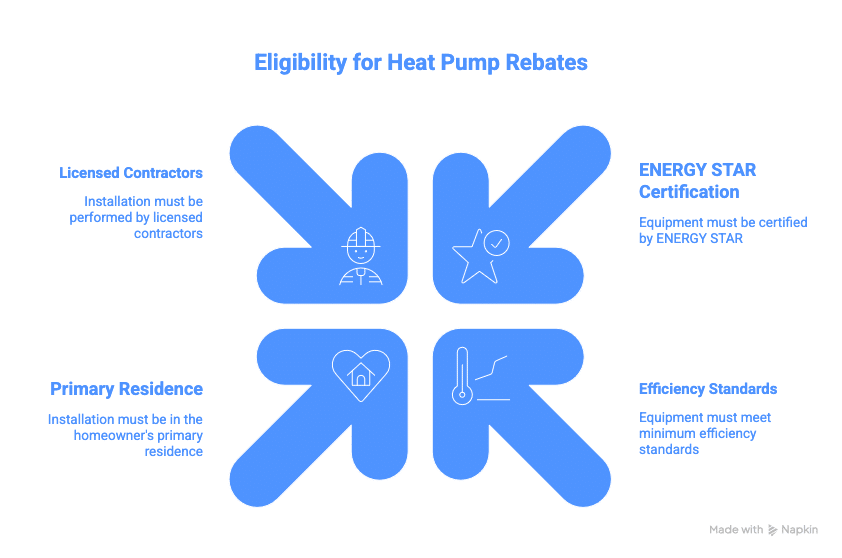
Common eligibility requirements
- Installation of ENERGY STAR-certified equipment
- Meeting minimum efficiency standards
- Primary residence installation
- Use of licensed contractors
Available programs
- Federal tax credits for energy-efficient home improvements
- State-level incentives such as those from the New York State Energy Research and Development Authority (NYSERDA)
- Utility rebates
These programs can significantly reduce upfront costs and improve return on investment.
Repair vs Replacement: Boiler vs Heat Pump Decision
When to keep your boiler
- Boiler is relatively new and efficient
- Home uses radiant heating that would be costly to replace
- Limited budget for system conversion
When to replace with a heat pump
- Boiler is aging or inefficient
- High fuel costs
- Desire for integrated heating and cooling
- Interest in electrification and sustainability
| Factor | Repair Boiler | Replace with Heat Pump |
|---|---|---|
| Upfront cost | Lower | Higher |
| Energy efficiency | Limited improvement | Significant improvement |
| Cooling capability | None | Included |
| Long-term savings | Lower | Higher |
| Environmental impact | Higher emissions | Lower emissions |
Risks and Common Mistakes
Common mistakes homeowners make
- Assuming a heat pump can directly replace a boiler without modifications
- Underestimating installation complexity
- Choosing undersized or oversized systems
- Ignoring insulation improvements
Potential risks
- Insufficient heating in poorly insulated homes
- Higher upfront costs than expected
- Performance issues from improper installation
Mitigation strategies
- Conduct a professional home energy assessment
- Ensure proper system sizing and design
- Work with licensed HVAC professionals
Maintenance Considerations
How maintenance differs between systems
Boiler maintenance
- Annual inspection and cleaning
- Checking pressure and valves
- Flushing the system
Heat pump maintenance
- Regular filter replacement
- Coil cleaning
- Refrigerant checks
- Seasonal inspections
Long-term maintenance benefits
Heat pumps generally require consistent but less specialized maintenance compared to combustion-based systems, and they eliminate risks associated with fuel burning.
Frequently Asked Questions
Can a heat pump work with existing radiators?
In most cases, standard air-source heat pumps do not directly work with traditional radiators. However, specialized systems or hybrid setups may allow partial integration. Converting to ducted or ductless air distribution is more common.
Are heat pumps effective in cold climates?
Yes, modern cold-climate heat pumps are designed to operate efficiently even in freezing temperatures. Advances in technology have expanded their performance range, making them viable in regions with cold winters.
Is it expensive to switch from a boiler to a heat pump?
The upfront cost can be higher due to installation changes, especially if ductwork is required. However, energy savings and available incentives can offset costs over time.
Do heat pumps replace both heating and cooling systems?
Yes, a heat pump provides both heating and cooling in one system, eliminating the need for a separate air conditioner.
What happens to my old boiler system?
It can be removed or left in place as a backup system, depending on the installation plan. Some homeowners choose hybrid systems for flexibility.
How long does installation take?
Installation timelines vary depending on system complexity. Simple replacements may take a day or two, while full conversions with ductwork can take several days.
Will switching to a heat pump lower my energy bills?
In many cases, yes. Heat pumps are highly efficient, and lower operating costs are common, especially when replacing older or less efficient boilers.
Is a heat pump environmentally friendly?
Heat pumps produce fewer emissions than fossil-fuel systems, especially when powered by renewable electricity, making them a more sustainable option.
Sources & References
U.S. Department of Energy – Heat Pump Systems
https://www.energy.gov/energysaver/heat-pump-systems
ENERGY STAR – Heat Pumps
https://www.energystar.gov/products/heating_cooling/heat_pumps
Environmental Protection Agency – ENERGY STAR Program
https://www.epa.gov/energystar
New York State Energy Research and Development Authority (NYSERDA)
https://www.nyserda.ny.gov
International Code Council – Mechanical Codes
https://www.iccsafe.org
Ocean Air Services provides professional heating and cooling services for residential and commercial properties.
For additional information or to request a quote, visit:
https://oceanaircool.com/contact-us/
Disclaimer: This content is for informational purposes only and does not constitute professional advice. Always consult a licensed HVAC professional.