How Much Does a Plumber for Building Maintenance in Riverhead Cost?
A plumber for building maintenance in Riverhead provides routine inspections, system repairs, pipe replacements, fixture servicing, and emergency plumbing support for residential and commercial properties. Costs depend on building size, plumbing system complexity, accessibility, and repair scope.
For property owners and facility managers in Riverhead, plumbing maintenance is critical infrastructure—not just a convenience. From multi-unit residential buildings to commercial properties, plumbing systems support sanitation, heating, water distribution, and code compliance. Undetected leaks, aging pipes, or neglected maintenance can lead to water damage, mold growth, rising utility bills, and operational disruption.
This guide explains what a plumber for building maintenance in Riverhead does, how plumbing systems work, installation requirements, repair versus replacement decisions, cost factors, efficiency considerations, risks of deferred service, and common questions property owners ask.
Plumber for Building Maintenance in Riverhead: What Services Are Included?
Building maintenance plumbing focuses on preventative care, inspections, repairs, and system upgrades that ensure reliable water distribution and drainage performance.
How Building Plumbing Systems Work
Most Riverhead properties include:
- Incoming municipal water supply lines
- Main shut-off valves
- Branch water lines
- Drain-waste-vent (DWV) systems
- Water heaters or boilers
- Backflow prevention devices
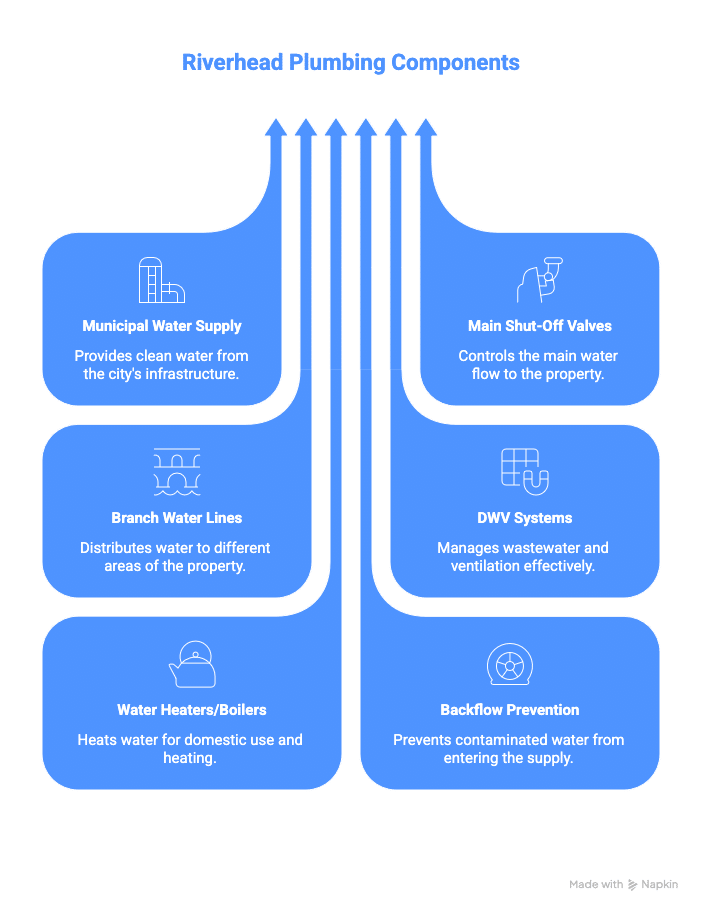
Plumbing systems operate under pressure and rely on proper venting and slope to maintain safe drainage. Water efficiency standards and fixture performance guidelines are often informed by agencies such as the Environmental Protection Agency, which oversees water conservation programs.
Core Plumbing Maintenance Services
- Leak detection and repair
- Pipe inspections
- Fixture servicing and replacement
- Drain cleaning
- Water heater maintenance
- Backflow testing
- Pressure regulation adjustments
Routine maintenance prevents major failures and supports compliance with plumbing codes.
Installation Requirements for Building Plumbing Systems
New installations or system upgrades require planning and code adherence.
Key Installation Considerations
- Pipe sizing calculations
- Water pressure regulation
- Drain slope compliance
- Ventilation design
- Backflow prevention installation
- Access for future maintenance
Plumbing installations must comply with state and local codes, which align with federal water efficiency standards and safety regulations.
Improper installation can cause:
- Low water pressure
- Drain backups
- Water hammer
- Fixture inefficiency
Professional plumbing contractors evaluate building layout before system design or upgrades.
What Impacts the Cost of a Plumber for Building Maintenance in Riverhead?
Plumbing service costs vary depending on project scope.
Cost & Pricing Factors
- Building size and number of units
- Type of plumbing material (copper, PEX, galvanized steel)
- Age of piping infrastructure
- Accessibility (walls, ceilings, crawl spaces)
- Emergency vs scheduled service
- Fixture replacement complexity
- Water heater capacity
Large commercial properties typically involve higher service complexity than single-family homes.
Repair vs Replacement Cost Factors
| Factor | Repair Scenario | Replacement Scenario |
|---|---|---|
| Pipe Age | Under 20–30 years | 40+ years or corroded |
| Leak Frequency | Isolated | Recurring |
| Water Pressure | Stable | Inconsistent |
| Water Quality Issues | Minor | Persistent corrosion |
| Long-Term Cost | Short-term savings | Reduced future repair frequency |
If leaks are widespread or pipes show systemic corrosion, repiping may be more cost-effective over time.
Water Heater vs Boiler: Maintenance and Performance Comparison
Many Riverhead properties use either water heaters or boilers for hot water and heating support.
| Feature | Water Heater | Boiler |
|---|---|---|
| Primary Function | Domestic hot water | Hydronic heating (may supply hot water) |
| Fuel Type | Gas, electric | Gas, oil |
| Efficiency Metric | UEF | AFUE |
| Maintenance Focus | Sediment flushing, anode rod | Pressure checks, circulator pumps |
| Lifespan | 8–15 years | 15–25 years |
Efficiency guidance from the U.S. Department of Energy helps property owners compare system performance and energy use.
Energy Efficiency and Water Savings Considerations
Plumbing maintenance directly impacts water and energy consumption.
How Maintenance Improves Efficiency
- Fixing leaks reduces water waste
- Replacing outdated fixtures lowers consumption
- Insulating hot water lines reduces heat loss
- Maintaining water heaters preserves energy performance
Programs such as ENERGY STAR promote high-efficiency fixtures and water heating systems.
Common Efficiency Upgrades
- Low-flow faucets
- High-efficiency toilets
- Tankless water heaters
- Smart leak detection systems
Reducing water waste lowers both utility and heating costs.
Repair vs Replace: When Is Repiping Necessary?
Building maintenance plumbers frequently assess whether aging pipes should be repaired or replaced.
Signs Repiping May Be Required
- Frequent leaks
- Rust-colored water
- Low water pressure
- Visible corrosion
- Repeated pipe repairs
Older galvanized steel pipes are particularly prone to corrosion over time.
Repiping improves:
- Water quality
- Pressure consistency
- Long-term reliability
A full inspection helps determine whether localized repair or system replacement is appropriate.
Risks and Common Plumbing Mistakes in Building Maintenance
Deferred plumbing service can create structural and health risks.
Common Mistakes
- Ignoring minor leaks
- Failing to flush water heaters
- Skipping annual inspections
- Using mismatched pipe materials
- Improper backflow prevention maintenance
Potential Risks
- Mold growth
- Water damage
- Structural deterioration
- Increased utility bills
- Code violations
Water intrusion can cause costly repairs beyond plumbing itself.
Maintenance Considerations for Riverhead Properties
Riverhead’s climate introduces seasonal challenges.
Winter Considerations
- Pipe insulation
- Freeze prevention
- Outdoor faucet shutoff
Summer Considerations
- Irrigation system inspections
- High-demand usage strain
- Drain blockages from landscaping debris
Routine seasonal checks reduce emergency plumbing calls.
Backflow Prevention and Compliance
Commercial buildings often require backflow prevention devices to protect potable water supplies.
Maintenance includes:
- Annual testing
- Valve inspection
- Pressure checks
Regulatory guidelines for water protection align with oversight from agencies such as the Environmental Protection Agency.
Failure to maintain backflow devices can result in fines or water contamination risks.
How Often Should Building Plumbing Be Inspected?
General recommendations:
- Annual inspection for residential properties
- Semi-annual inspections for commercial buildings
- Quarterly checks for high-occupancy properties
Preventative inspections help identify issues before they become emergencies.
Tankless vs Traditional Water Heater Comparison
Property owners may evaluate system upgrades.
| Feature | Tank Water Heater | Tankless Water Heater |
|---|---|---|
| Hot Water Supply | Stored volume | On-demand |
| Energy Efficiency | Moderate | Higher (no standby loss) |
| Installation Complexity | Lower | Higher |
| Space Requirements | Larger footprint | Compact |
| Lifespan | 8–15 years | 15–20 years |
The U.S. Department of Energy provides guidance on energy savings associated with high-efficiency water heating systems.
FAQ’s
What does a plumber for building maintenance in Riverhead do?
A building maintenance plumber handles inspections, leak detection, pipe repairs, fixture servicing, water heater maintenance, and system upgrades to keep plumbing systems operating efficiently and safely.
How often should plumbing systems be inspected?
Residential properties typically require annual inspections, while commercial buildings may need semi-annual or quarterly reviews depending on occupancy and usage levels.
When should pipes be replaced instead of repaired?
If leaks are frequent, corrosion is visible, or water pressure remains inconsistent after repairs, repiping may provide a more reliable long-term solution.
Do high-efficiency plumbing fixtures reduce utility bills?
Yes. Low-flow fixtures and efficient water heaters reduce water usage and the energy required to heat water, lowering overall operating costs.
How long do plumbing pipes last?
Copper pipes often last 50+ years, while galvanized steel pipes may corrode within 40 years. Lifespan depends on water quality and maintenance.
What are signs of hidden leaks?
Unexpected increases in water bills, damp drywall, mold odors, and low water pressure may indicate hidden leaks requiring professional detection.
Is preventative plumbing maintenance necessary?
Routine maintenance helps prevent water damage, reduces emergency repair risk, and extends system lifespan.
Are tankless water heaters better for large properties?
They provide on-demand hot water and higher efficiency but may require system upgrades depending on building demand and gas or electrical capacity.
Sources & References
- U.S. Department of Energy
- Environmental Protection Agency
- ENERGY STAR
- New York State Energy Research and Development Authority (NYSERDA)
- American Society of Plumbing Engineers (ASPE)
Ocean Air Services provides professional heating and cooling services for residential and commercial properties.
For additional information or to request a quote, click here
Disclaimer: This content is for informational purposes only and does not constitute professional advice. Always consult a licensed HVAC professional.