How Much Does a Residential Plumber in Riverhead Cost?
A residential plumber in Riverhead provides installation, repair, replacement, and maintenance for home plumbing systems, including pipes, drains, water heaters, and fixtures. Costs depend on the type of service, system age, accessibility, and material requirements. Ocean Air Services provides professional heating and cooling services for residential and commercial properties.
For homeowners in Riverhead, plumbing systems are essential to daily living. From clean drinking water and hot showers to efficient drainage and leak prevention, plumbing infrastructure supports comfort, sanitation, and property protection. When issues arise—whether a leaking pipe, low water pressure, or failing water heater—timely professional service prevents structural damage and rising utility costs.
This guide explains what a residential plumber in Riverhead does, how home plumbing systems work, installation requirements, repair versus replacement decisions, cost factors, energy efficiency considerations, risks of neglect, and common homeowner questions.
What Services Are Included?
A residential plumber handles the full lifecycle of plumbing systems inside and around your home.
How Residential Plumbing Systems Work
Most homes in Riverhead include:
- Municipal water supply connection
- Main shutoff valve
- Cold and hot water distribution lines
- Drain-waste-vent (DWV) piping
- Water heater
- Outdoor spigots and irrigation connections
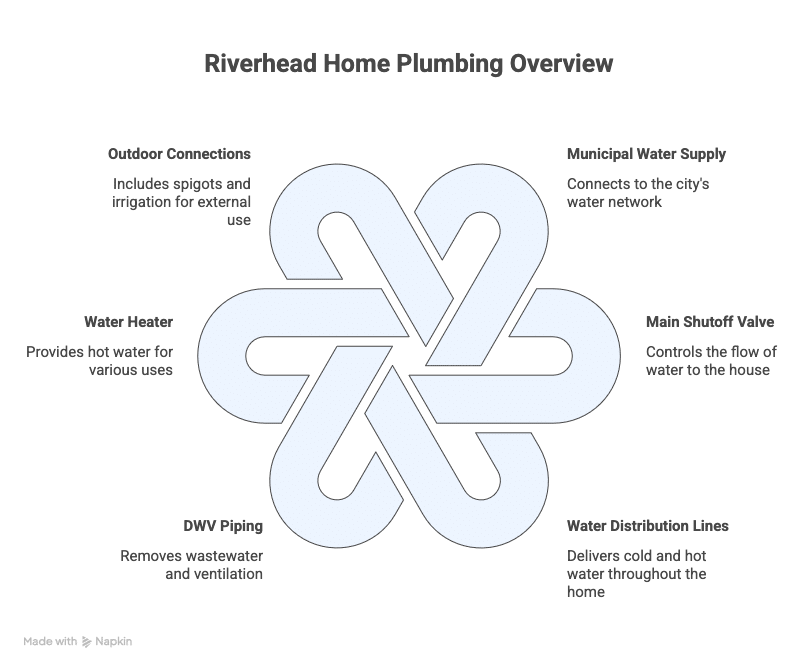
Water enters under pressure, flows through branch lines to fixtures, and drains via gravity through properly vented piping.
Water efficiency standards are influenced by agencies such as the Environmental Protection Agency, which promotes water conservation through national programs.
Core Residential Plumbing Services
- Leak detection and pipe repair
- Drain cleaning and clog removal
- Faucet and toilet repair
- Water heater installation
- Garbage disposal service
- Sewer line inspections
- Pipe replacement
These services address both urgent problems and preventative maintenance.
Installation Requirements for Residential Plumbing Systems
When installing new plumbing fixtures or upgrading pipes, proper planning ensures safe and efficient operation.
Key Installation Considerations
- Pipe material compatibility (copper, PEX, CPVC)
- Water pressure regulation
- Vent pipe configuration
- Drain slope and trap installation
- Backflow prevention
- Code compliance
Improper installation can lead to:
- Persistent leaks
- Low water pressure
- Sewer odors
- Premature fixture failure
Licensed plumbers follow state and local plumbing codes to ensure safety and long-term performance.
What Impacts the Cost of a Residential Plumber in Riverhead?
Plumbing costs vary depending on project complexity.
Cost & Pricing Factors
- Type of repair or installation
- Pipe material and replacement length
- Accessibility (walls, ceilings, crawl spaces)
- Age of existing plumbing
- Emergency vs scheduled service
- Fixture type and brand
Small fixture repairs typically cost less than whole-house repiping or sewer line replacement.
Repair vs Replacement Cost Factors
| Factor | Repair | Replacement |
|---|---|---|
| Leak Frequency | Isolated | Recurring |
| Pipe Age | Under 25 years | 40+ years |
| Water Pressure | Stable | Chronically low |
| Corrosion Level | Minor | Widespread |
| Long-Term Value | Short-term solution | Lower lifetime repair costs |
If plumbing issues are frequent, replacement may reduce long-term maintenance expenses.
Tank Water Heater vs Tankless Water Heater
Many Riverhead homeowners consider upgrading water heating systems.
| Feature | Tank Water Heater | Tankless Water Heater |
|---|---|---|
| Hot Water Supply | Stored capacity | On-demand |
| Energy Efficiency | Moderate | Higher (no standby heat loss) |
| Installation Complexity | Lower | Higher |
| Lifespan | 8–15 years | 15–20 years |
| Space Requirements | Larger | Compact |
Guidance from the U.S. Department of Energy indicates that tankless systems can reduce energy consumption in homes with moderate hot water demand.
Energy Efficiency and Water Savings
Residential plumbing plays a direct role in energy and water consumption.
How Plumbing Maintenance Improves Efficiency
- Fixing leaks prevents water waste
- Replacing outdated toilets reduces gallon-per-flush usage
- Installing efficient showerheads lowers hot water demand
- Flushing water heaters improves heating performance
Programs under ENERGY STAR promote high-efficiency appliances and water heating equipment.
Common Water-Saving Upgrades
- Low-flow toilets
- Water-efficient faucets
- Smart irrigation controllers
- Tankless water heaters
Reducing water waste lowers both water and energy bills.
Repair vs Replace: When Should Pipes Be Replaced?
Over time, plumbing materials degrade.
Signs Replacement May Be Necessary
- Discolored water
- Frequent pipe leaks
- Visible corrosion
- Persistent low water pressure
- Aging galvanized steel piping
Repiping improves reliability and can prevent costly water damage.
A professional inspection helps determine whether isolated repair or full replacement is the better option.
Risks and Common Plumbing Mistakes
Ignoring plumbing problems can result in structural damage.
Common Mistakes
- Delaying minor leak repairs
- Using chemical drain cleaners excessively
- Skipping annual water heater flushing
- Installing mismatched pipe materials
- Ignoring small signs of corrosion
Potential Risks
- Mold growth
- Wood rot
- Foundation damage
- Increased utility costs
- Sewer backups
Proactive maintenance reduces emergency repair scenarios.
Seasonal Plumbing Considerations in Riverhead
Riverhead homeowners face climate-related plumbing risks.
Winter Risks
- Frozen pipes
- Burst exterior hose bibs
- Insufficient insulation
Summer Considerations
- Increased irrigation demand
- Sewer line root intrusion
- Higher water usage
Seasonal inspections reduce weather-related damage.
Sewer Line vs Drain Line: Key Differences
Understanding the difference helps homeowners identify problems accurately.
| Feature | Drain Line | Sewer Line |
|---|---|---|
| Function | Carries wastewater from fixtures | Connects home to municipal sewer |
| Location | Inside home | Underground outside |
| Common Issues | Clogs, buildup | Root intrusion, pipe collapse |
| Repair Scope | Localized | More extensive excavation |
| Inspection Method | Camera inspection | Camera + possible excavation |
Sewer line issues often require more comprehensive repairs than interior drain clogs.
Maintenance Considerations for Home Plumbing
Routine plumbing maintenance may include:
- Annual inspection
- Water heater flushing
- Checking water pressure
- Inspecting exposed piping
- Testing sump pumps
Regular maintenance extends plumbing lifespan and prevents costly emergencies.
Backflow Prevention and Safety
Backflow prevention protects potable water from contamination.
Maintenance may involve:
- Valve inspection
- Pressure testing
- Annual certification (where required)
Water safety standards are influenced by the Environmental Protection Agency to ensure public health protection.
FAQs
How do I know if I need a residential plumber in Riverhead?
If you experience persistent leaks, clogged drains, low water pressure, discolored water, or inconsistent hot water, a licensed plumber should inspect your system.
How often should plumbing systems be inspected?
Annual inspections are recommended for most homes. Older properties may benefit from more frequent evaluations to monitor aging pipes.
Is a tankless water heater worth it?
Tankless systems offer higher efficiency and longer lifespan but require greater upfront installation cost. Suitability depends on household water demand.
What causes low water pressure?
Common causes include pipe corrosion, hidden leaks, pressure regulator failure, or municipal supply issues.
How long do residential pipes last?
Copper pipes can last 50+ years, while galvanized steel pipes often degrade after 40 years. Lifespan depends on water quality and maintenance.
Can small leaks cause serious damage?
Yes. Even minor leaks can lead to mold growth, structural weakening, and increased water bills if left unaddressed.
Are chemical drain cleaners safe?
Frequent use may corrode pipes over time. Mechanical cleaning methods are typically safer for long-term plumbing health.
When should a sewer line be replaced?
Frequent backups, root intrusion, or pipe collapse identified via camera inspection may indicate replacement is necessary.
Sources & References
- U.S. Department of Energy
- Environmental Protection Agency
- ENERGY STAR
- New York State Energy Research and Development Authority (NYSERDA)
- American Society of Plumbing Engineers (ASPE)
Ocean Air Services provides professional heating and cooling services for residential and commercial properties.
For additional information or to request a quote, click here
Disclaimer: This content is for informational purposes only and does not constitute professional advice. Always consult a licensed HVAC professional.